Space Station LAN
A Windows tray app that serves the local copy of the library over HTTPS to devices on the home network, and doubles as a desktop player.
What it does
- Serves tracks from the local music folder with range requests, only to private-network callers. Measured from the PC, the first byte arrives in about 13 ms, against about 1.9 s through the Worker and Drive.
- Clients such as the Android app and the Chromecast receiver probe it and fall back to the Worker when the PC is off or they are away.
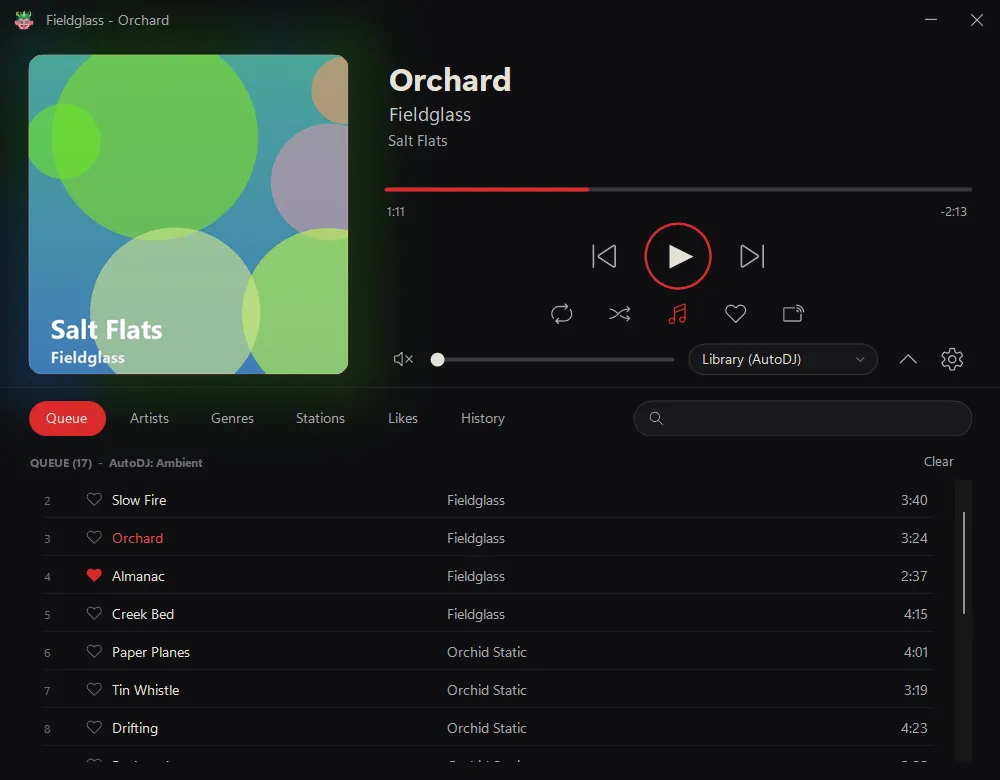
- A borderless, custom-drawn player with a library browser, fuzzy search, a queue you can drag, gapless playback, likes, history, three window sizes, media keys and toast notifications.
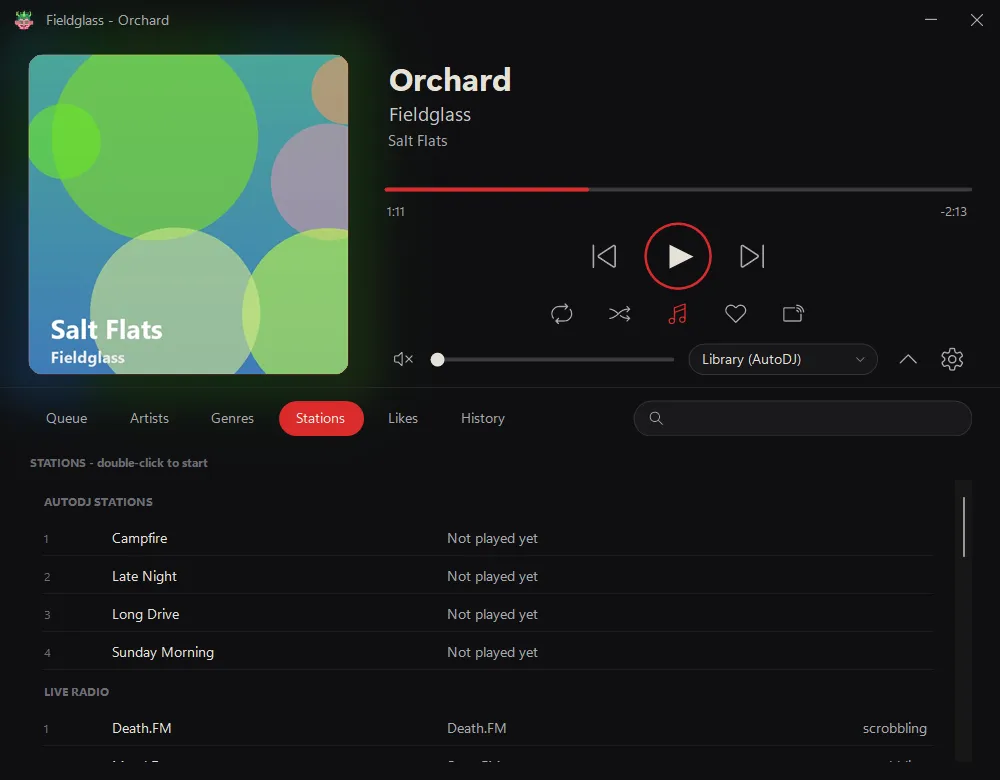
- Plays live Death.FM and SomaFM radio with mirror failover, self-healing after sleep or a network drop, and Last.fm scrobbling.
- Casts to a Chromecast with the AutoDJ walk, and can hand the walk to a GroundControl device.
Under the hood
- C# on .NET 10 with Windows Forms, a Kestrel server, Sharpcaster for Cast, ManagedBass for radio and Windows' media playback for the library.
- Local files are matched to catalog tracks by file size from the Worker's index, trusted only when the names also look right. An unmatched track is simply streamed from the Worker.
- A Let's Encrypt certificate is obtained and renewed by ACME DNS-01 through Cloudflare's API, then hot-swapped into the running server, so nothing has to be reachable from the internet. A DNS keeper holds the host's record at the PC's current LAN address.
- The app registers its address and a random token with the Worker, and its secrets are kept DPAPI-encrypted for the current Windows user.
- Radio uses BASS after measuring that Windows' own player paused near the start of Death.FM; it falls back automatically if BASS cannot load.
The screenshots are the player window run against a scratch library of generated audio files and a local test copy of the Worker. The tray menu and the settings window are not shown.